
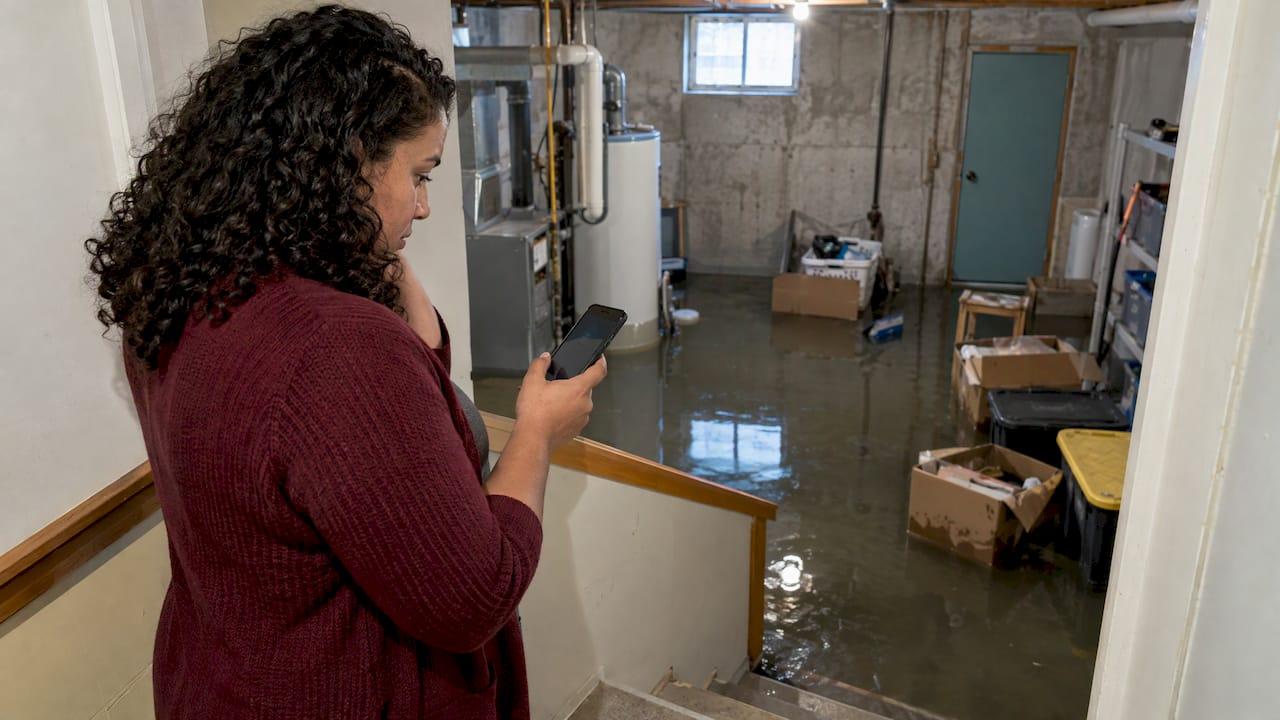
Restoration local SEO is the work of getting your company into the map pack and the top organic results when someone nearby searches for water, fire, mold or storm help. Google ranks local results on relevance, distance and prominence, so you win by matching each loss type with a clear page and profile category, by earning reviews, and by making the call effortless. A booked job, not a ranking, is the result that counts, so the measurement has to reach the phone and the CRM. If you want that built and tracked for you, our Lead Generation and CRM Setup services are made for home service companies.
TL;DR
- Google decides local rankings mainly on relevance, distance and prominence. You cannot pay for a better local ranking, so the inputs you control are your profile, your pages and your reputation.
- Build one strong page per loss type (water, fire, mold, storm) and one per core service area, and keep your Google Business Profile categories, hours and service areas accurate.
- Reviews, photos from real jobs and a fast mobile site with a tap-to-call button turn visibility into phone calls.
- Track calls, qualified leads, booked jobs and cost per booked job. Rankings alone tell you very little about revenue.
- Expect the work to compound over months, not days, and treat it as a system rather than a one-time project.
Table of Contents
- What local SEO means for a restoration company
- How Google decides who appears
- Set up your Google Business Profile for emergency searches
- Build the pages that match what people search
- Make the site convert the visit into a call
- Track what matters: calls, qualified leads and booked jobs
- A realistic timeline
- Where we come in
- Our perspective
- FAQ
- Sources
What local SEO means for a restoration company
A homeowner with a flooded basement does not browse. They search on a phone, look at the first few businesses that appear with a map, and call. That moment is what local SEO targets. The listings that appear above the regular results when Google decides the search has local intent are called the Local Pack, or map pack, and which companies show up depends heavily on where the searcher is standing.
That last point changes how you should think about it. There is no fixed number one position. The same query from two neighborhoods can show two different sets of companies, so "we rank first for water damage restoration" is rarely a meaningful statement. What matters is whether you appear for the right searches in the neighborhoods and towns you actually serve.
For restoration, three features make local SEO different from, say, a landscaper's:
- Urgency. Emergency searches convert in minutes. A page that loads slowly or hides the phone number loses the job to the next listing.
- Multiple loss types. Water, fire, smoke, mold and storm damage are different searches with different wording, and one generic "restoration services" page does not answer them all.
- Insurance and trust. Customers are stressed, often dealing with a claim, and lean on reviews and visible proof of real work.
How Google decides who appears
Google states that local results are mainly based on relevance, distance and prominence. Relevance is how well your profile matches what the person typed. Distance is how far you are from the searcher. Prominence is how well known you are, drawn from information such as links and reviews. The same page notes that more reviews and positive ratings can help your local ranking.
It also states plainly that there is no way to request or pay for a better local ranking. That is useful to know before you talk to anyone selling shortcuts. The levers are the ones Google describes, and they can be worked on honestly.
A practical way to organize those levers comes from Search Engine Land's 90-day plan for service businesses, which names three: relevance (Google clearly understands your services and service area), prominence (reviews, links, mentions and local trust signals) and conversion (your site and profile make contacting you frictionless). The author's point is that when visibility feels unstable, one of the three is usually weak, and fixing only one gives inconsistent results. Strengthening all three creates steadier lead flow.
Here is how each lever looks for a restoration company:
| Lever | What Google looks for | What you do |
|---|---|---|
| Relevance | A profile and site that clearly match the search | Correct primary category, service pages per loss type, clear service area |
| Distance | How close you are to the searcher | Accurate address or service area, service area pages for the towns you cover |
| Prominence | Reviews, links, mentions | Steady review flow, local citations and links, real-job content |
| Conversion | A frictionless path to contact | Click-to-call, fast mobile pages, 24/7 messaging that is actually answered |
If you want a deeper walk-through of the factors that move rankings in the first three months, our guide to map pack ranking factors for home services covers them in detail.
Set up your Google Business Profile for emergency searches
Your profile is usually the first thing a searcher sees, so it carries more weight than any page on your site. The Restoration Industry Association's practical SEO tips recommend adding accurate business hours, service areas and contact information, choosing categories such as "Water Damage Restoration Service," uploading good-quality before-and-after project photos and asking happy clients for reviews.
Turn that into a checklist:
- Choose the primary category carefully. It should match the work that earns you the most, for most restoration companies water damage. Add secondary categories for the other services you actually perform.
- Use your real business name. Google's guidelines for representing your business say the name should reflect your real-world name as used on your storefront, website and stationery. Keyword-stuffed names are a fast route to suspension.
- Set the address and service area honestly. The same guidelines ask for a precise, accurate address and/or service area. If you serve customers at their locations, list a designated service area rather than a virtual office.
- Fill in hours, phone and website. If you answer calls around the clock, say so in a way that matches reality. A profile promising 24/7 service that sends callers to voicemail costs you the job and the review.
- Add services and descriptions. List water extraction, structural drying, fire and smoke cleanup, mold remediation and storm or board-up services, each in plain words.
- Upload real photos. Trucks, crews, drying equipment in place and finished work. Photos of actual jobs, with the customer's permission, build trust faster than stock images.
- Post and answer. Answer the questions people ask and keep the profile active.
We lay out a month-by-month routine in our 30-day Google Business Profile playbook for contractors.
Reviews: the prominence engine
Reviews are the most visible prominence signal and the one customers read before they call. Build a process instead of hoping:
- Ask at the moment of relief, when the work is finished and the customer is thanking the crew.
- Send a direct link by text so leaving a review takes under a minute.
- Reply to every review, positive or negative, in a calm and specific way.
- Mention the service naturally in your reply ("glad we could dry out your basement quickly") without stuffing keywords.
Reviews that describe the actual loss and the town give Google and future customers more to match against.
Build the pages that match what people search
Most restoration websites lose local visibility because everything is squeezed into one "services" page. The structure that works is simple: one page for each loss type you want to win, plus pages for the places you serve.
Service pages by loss type
At minimum:
- Water damage restoration (with sub-pages for burst pipes, flooded basements, sewage backup and appliance leaks if you handle them)
- Fire and smoke damage restoration
- Mold remediation
- Storm and wind damage, including roof tarping and board-up if you offer them
Each page should open with what the homeowner should do right now, state clearly what you do and how fast you respond, show real photos and local reviews, explain the process in plain steps and put the phone number and a call button within one thumb-length of wherever the reader is on the page. Avoid copying the same paragraph across pages with only the loss type swapped. Thin duplicates do not build relevance.
Service area pages
If you cover several cities, a dedicated page for each important city helps match "near me" and town-name searches. The rule is that each page needs something real: the neighborhoods you reach, typical local issues (basement flooding in older housing stock, storm patterns, freezing pipes), nearby jobs and local reviews. Pages that only swap the city name are the pattern to avoid. Our guide to building service area pages that rank shows how to structure them, and if you run several branches, the multi-location local SEO playbook covers profiles and pages per location.
Keywords to build around
People describe the problem, not the industry term. Write pages and headings around phrases like:
- water damage restoration in [city]
- burst pipe cleanup, flooded basement cleanup
- fire damage cleanup, smoke odor removal
- mold remediation, mold testing and removal
- storm damage repair, emergency board-up
Use these in titles, headings and the opening of each page where they fit naturally, then check your own search data and call logs to see which phrasings your customers actually use.
Make the site convert the visit into a call
Rankings bring the visit and the site decides whether it becomes a job. For emergency work, the checklist is short:
- Mobile first. Most emergency searches happen on a phone. Test your key pages on a real phone, on cellular data, not just on office wifi.
- Click-to-call everywhere. A sticky call button, a phone number in the header and a clear number at the end of every section.
- Speed. Compress photos and avoid heavy sliders and auto-playing video on emergency pages.
- Trust at the top. Review rating, licensing and insurance information, and a line on how quickly you respond.
- Insurance help. Many callers worry about the claim. A plain explanation of how you work with insurers reduces hesitation, provided it describes what you actually do.
- A short form as backup. Some people will not call at night. Offer a simple form or text option and make sure someone answers it.
The Search Engine Land sprint plan treats this as the conversion lever for a reason: strong rankings with a clumsy contact path just send leads to a competitor with an easier one. Our website optimization guide looks at what to improve on the site itself.
Track what matters: calls, qualified leads and booked jobs
The most common failure in restoration SEO is reporting that stops at rankings and traffic. Rankings do not pay for trucks. Track the whole path:
- Calls by source. Use call tracking numbers so you can tell which calls came from the profile, the website and paid ads. Keep your main number consistent in listings and use tracking numbers with care so your business information stays consistent.
- Qualified leads. Not every call is a job. Tag calls as qualified (real loss, in your service area, a service you perform), spam, wrong number or existing customer.
- Booked jobs. Connect the lead to the job in your CRM, with the job type and value.
- Cost per booked job. Divide what you spent on SEO, ads and tools by booked jobs, not by clicks or calls.
- Close rate and speed to answer. If calls go unanswered after hours, your best ranking becomes a missed opportunity.
A simple monthly view might look like this:
| Metric | Why it matters |
|---|---|
| Profile calls, direction requests, website clicks | Shows map pack visibility turning into action |
| Calls by loss type | Shows which pages and categories earn emergency work |
| Qualified lead rate | Separates real demand from noise |
| Booked jobs and revenue by source | Ties SEO to revenue |
| Cost per booked job | Lets you compare SEO with paid channels |
This is also where organic and paid work together. Paid search for water damage can be expensive, and our article on water damage Google Ads costs explains how to stop wasting clicks while organic visibility builds. For a view on which searches bring you business by name versus by service, see brand vs non-brand search.
A realistic timeline
Local SEO compounds. A sensible sequence for the first 90 days:
- Weeks 1 to 2: audit your profile, categories, name, address and service area, fix the call path and set up call tracking.
- Weeks 3 to 6: publish or rebuild your core loss-type pages, start a steady review process and add real job photos.
- Weeks 7 to 12: add service area pages for your highest-value towns, build local links and mentions, and review the call data to see which pages and categories perform.
After that, the work is maintenance with compounding returns: new reviews, new job photos, updated pages and a regular look at which calls became booked jobs. Our local SEO blueprint for contractors and the guide to AI for local SEO extend this plan.
Where we come in

Leapify Media works with home service companies, including restoration businesses, that want marketing spend to turn into booked jobs. Our SEO & Content service starts from $2,000 per month, and Google Ads Management is $1,500 per month. Our plans start with Foundation from $2,500 per month, and Growth starts from $7,500 per month. We also offer CRM setup and automation and On-Premise AI Dispatch, which is $1,000 per month with a $7,500 one-off setup fee. Our AI infrastructure is built and hosted in-house, and client data stays proprietary and secure. You also get direct access to senior strategists.
If you want the whole system, from the profile and the loss-type pages to call tracking and the CRM, see the Leapify Media pricing and plans.
If you would rather talk through your market first, start at leapifymedia.com.
Our perspective
Restoration is the clearest case of why local SEO has to be tied to booked jobs. The customer is in a crisis, the decision takes minutes, and the company that answers first and looks trustworthy wins. A ranking report that ignores what happened to the call afterward is only half a report.
We build for the full path. That means the profile and pages that earn the visibility, and the infrastructure behind it: call tracking, intent scoring, lead dispatch and CRM automation designed around home service workflows. Our systems are engineered and hosted in-house on our own servers rather than relying on third-party AI, so the data your calls and leads generate stays yours and stays secure.
Our view is that restoration owners should judge any marketing by cost per booked job. When the SEO, the ads and the follow-up are measured together, you can see what is working and put more money behind it. That is what we aim to give our clients, with senior strategists who know home services rather than a generalist account manager.
Everson Gorski
FAQ
How long does restoration local SEO take to work?
There is no guaranteed timeline, because Google does not publish its ranking system and says you cannot pay for a better local ranking. A 90-day sprint of profile fixes, loss-type pages, reviews and call-path improvements is a common planning frame, with gains building over the following months as reviews and content accumulate.
Do I need a separate page for water, fire, mold and storm damage?
Yes, wherever you want to be found for that search. Each loss type has its own wording, urgency and process, and a dedicated page lets Google and the visitor see exactly what you do. Give each page real photos, a clear process and a visible phone number.
How many Google reviews do I need to rank?
Google names no number. It says more reviews and positive ratings can help local ranking, so the aim is a steady flow of recent, specific reviews rather than a one-time burst. Ask every satisfied customer at the end of the job and reply to each review.
Can I rank in cities where I have no office?
Your profile is mainly matched to searchers by distance, so ranking is strongest near your listed address or within your designated service area. Service area pages with real local content help you appear for the towns you serve, but you must represent your business honestly under Google's guidelines.
How do I know if SEO is actually bringing jobs?
Use call tracking, tag each call as qualified or not, and connect booked jobs to their source in your CRM. Then calculate cost per booked job. That one number tells you more than rankings or traffic.
Sources
- Tips to improve your local ranking on Google, Google Business Profile Help
- Guidelines for representing your business on Google, Google Business Profile Help
- What Is the Google Local Pack? How to Rank in the 3-Pack, Search Engine Land
- Local SEO sprints: A 90-day plan for service businesses, Search Engine Land
- SEO & Marketing for Restoration Companies: 5 High-Impact Tips, Restoration Industry Association