
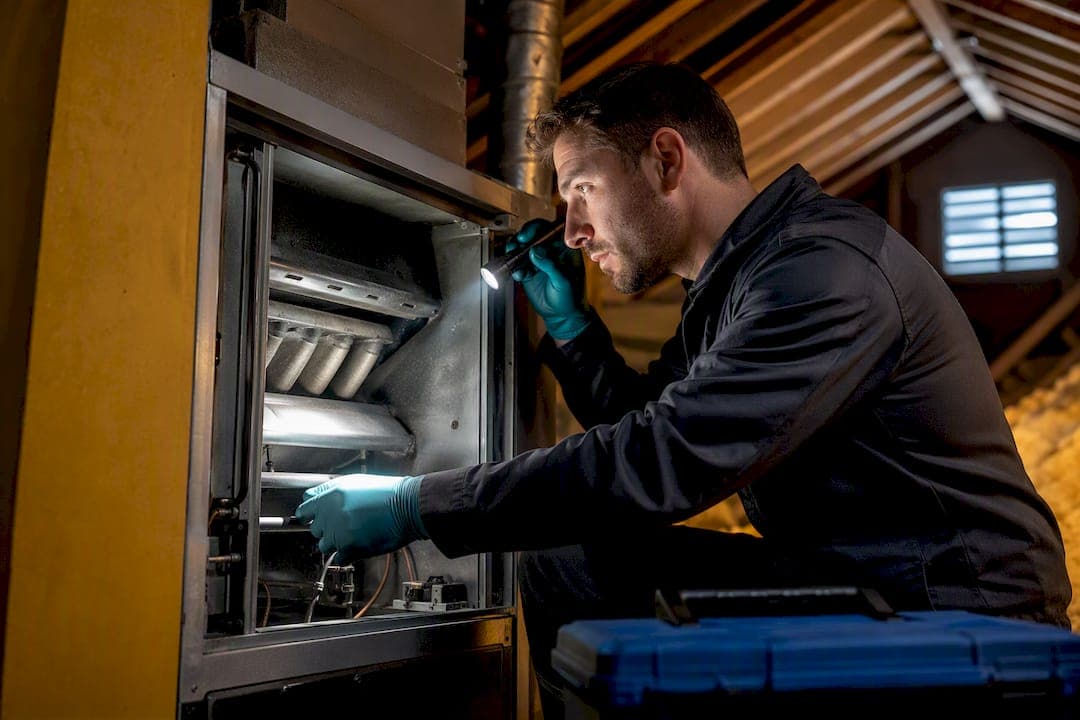
Shoulder season is the mild stretch of spring and fall when your HVAC system runs the least, and it's the smartest window to schedule maintenance. Book a professional tune-up and swap your filter now, before temperatures swing hard in either direction. Acting during this lull means shorter wait times, better pricing, and fewer surprise breakdowns once summer or winter demand hits.
TL;DR:
- Scheduling HVAC maintenance two to four weeks before extreme weather conditions arrive reduces the risk of system failures during peak demand and avoids higher service costs.
- Regional climate heavily influences shoulder season timing, so homeowners should consult local weather data or contractor advice to identify the best window for service.
- Early maintenance during shoulder seasons improves energy efficiency by lowering strain on system components, which can lead to savings on energy bills and prolong equipment lifespan.
- Important DIY tasks include replacing filters, clearing outdoor units, and testing thermostats, while professional tune-ups cover refrigerant levels, electrical connections, and coil cleanliness.
- Waiting until discomfort appears in summer or winter often results in emergency repairs, higher costs, and overburdened contractors, emphasizing the importance of proactive scheduling.
Table of Contents
- Which Months Count as HVAC Shoulder Season Where You Live?
- Why Shoulder Season Maintenance Actually Saves You Money
- The Shoulder-Season HVAC Maintenance Checklist
- When to Book Your Tune-Up (and What It Costs)
- Mistakes That Undo Your Shoulder-Season Prep
- How Contractors Actually Schedule Around Shoulder Season
- Where to Read More on Shoulder-Season HVAC Care
- What Homeowners Consistently Get Wrong About Timing
- Sources
Which Months Count as HVAC Shoulder Season Where You Live?
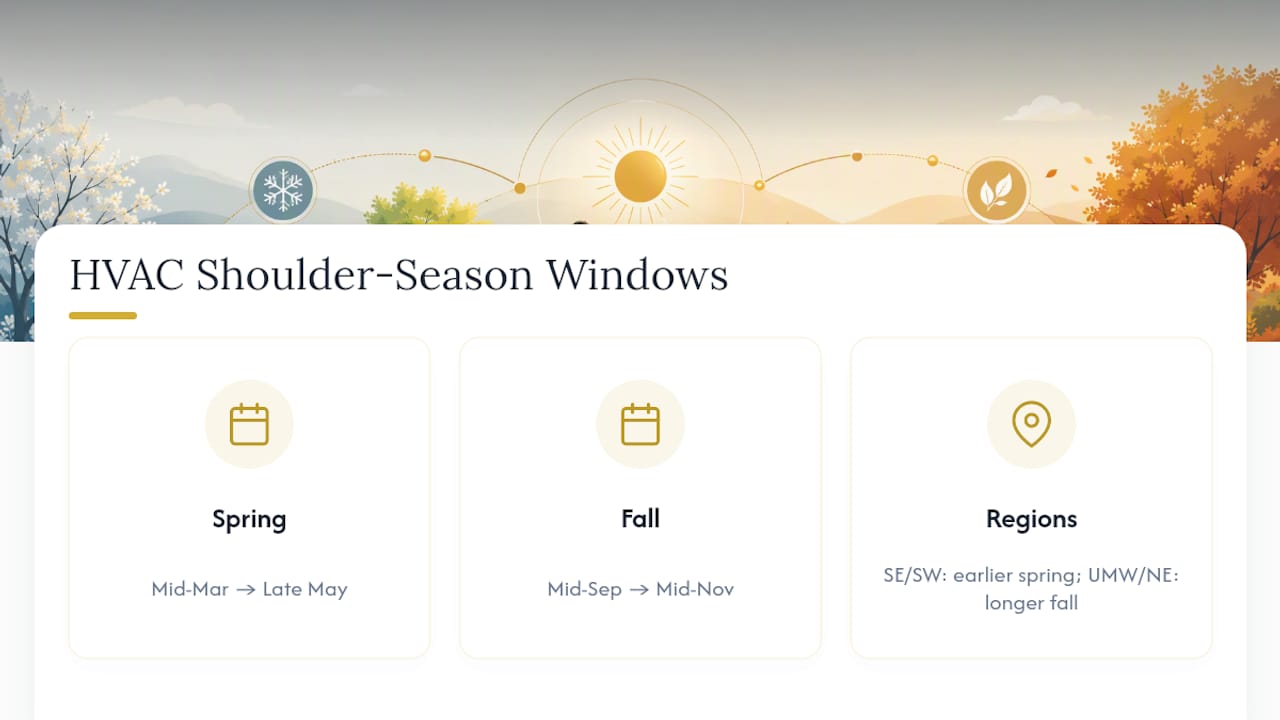
Shoulder season generally falls between mid-March and late May in spring, and between mid-September and mid-November in fall, but your actual window depends heavily on regional climate. Homeowners in the Southeast or Southwest often see a shorter, earlier spring shoulder season because summer heat arrives fast. In the Upper Midwest or Northeast, fall shoulder season stretches longer since winter heating demand ramps up more gradually.
Local temperature patterns matter more than the calendar. If your area typically hits 80 degrees Fahrenheit by early May, your cooling shoulder season closes earlier than someone in a cooler zone. The EIA's state-level energy data shows how regional demand curves shift, and checking your own state's page gives you a realistic sense of when local strain on the grid, and on your system, typically begins.
A simple rule works almost everywhere: schedule your tune-up about two weeks before the first sustained stretch of extreme heat or cold historically arrives in your area. Look at last year's weather data or ask a local contractor when their call volume usually spikes. That two-week buffer gives a technician time to catch problems before your system gets pushed hard.
Why Shoulder Season Maintenance Actually Saves You Money
Acting during the lull isn't just convenient timing, it changes the mechanical and financial outcome. A system that's cleaned, checked, and calibrated before peak season runs with less strain, which means lower energy draw and fewer components working overtime.
ENERGY STAR recommends scheduling contractor check-ups in spring for cooling and fall for heating, timed loosely around the clock changes as a memory cue. That timing isn't arbitrary. It puts the inspection ahead of the exact months when compressors and heat exchangers face the heaviest load.
Data Point: Fleet and service-trip data from Samsara's analysis of HVAC seasonality shows technician demand climbing through summer and peaking into fall in many regions, meaning homeowners who book in the shoulder window sidestep the longest queues and highest emergency-service premiums.
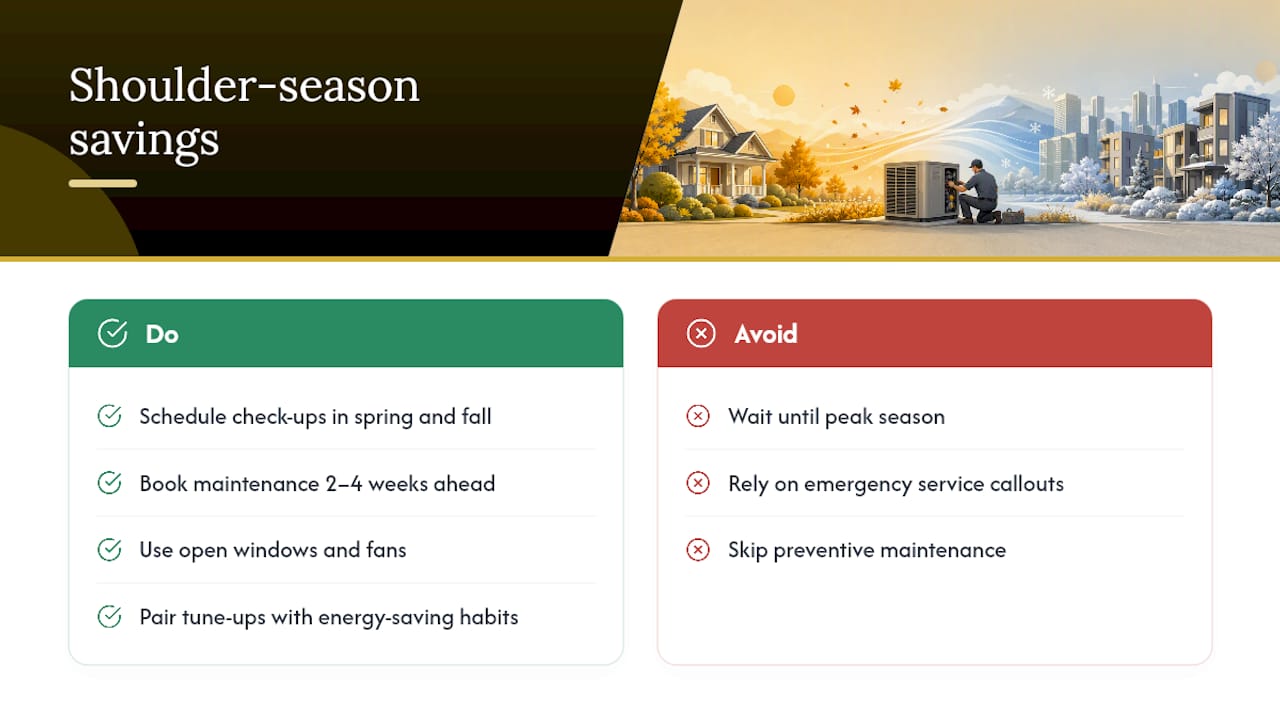
There's also a straightforward energy angle. Utility-backed guidance on 'shoulder season' savings points to simple behavioral shifts, like using open windows and fans instead of mechanical cooling during mild stretches, that cut consumption without sacrificing comfort. Combine that with preventive maintenance and you're stacking savings from two directions: less mechanical wear and less energy use overall.
The Shoulder-Season HVAC Maintenance Checklist
Not every task deserves equal urgency. Here's how to prioritize your time, split between what you can do yourself and what needs a licensed technician.
High-priority DIY tasks (do these every shoulder season)
- Replace or clean your air filter. A 30 to 90 day replacement cadence depending on filter type and household conditions, like pets or allergies, is the single most effective step you control.
- Clear the outdoor unit. Remove leaves, grass clippings, and debris from within two feet of the condenser so airflow isn't restricted.
- Check the condensate drain line. A clogged line causes water backup and can trip a safety switch that shuts your system down entirely.
- Test your thermostat. Confirm it's responding correctly and replace batteries if it's a battery-powered model.
Seasonal DIY tasks by season
Spring (before cooling season):
- Vacuum dust from vents and registers throughout the house.
- Straighten any bent fins on the outdoor condenser coil.
- Confirm all supply and return vents are open and unblocked by furniture.
Fall (before heating season):
- Test carbon monoxide detectors near the furnace and sleeping areas.
- Inspect visible ductwork for gaps or disconnected sections.
- Clear the area around any gas furnace intake and exhaust vents.
What a professional tune-up covers
A licensed technician checks things you physically can't without training or equipment: refrigerant charge levels, electrical connections and capacitor health, coil cleanliness, blower motor function, and, in fall, a heat exchanger inspection for cracks. Money's seasonal HVAC guide outlines these as standard tasks during a biannual visit, and most appointments run 60 to 90 minutes.
Pro Tip: Take a photo of your outdoor unit's data plate before your appointment. It has the model and serial number, and having it ready speeds up parts ordering if the technician finds something that needs replacement.
When to Book Your Tune-Up (and What It Costs)
Book two to four weeks before the season actually shifts, not after the first heat wave or cold snap. HVAC Base notes that this lead time gives technicians room to order parts and schedule follow-up work if the inspection turns something up, rather than leaving you stuck in a queue during peak demand.
- Late February through March: ideal window for spring AC tune-ups in most climate zones.
- Late August through September: the sweet spot for fall heating system checks before furnace season begins.
- Avoid: waiting until the first 90-degree day or the first hard freeze, when everyone else calls at once.
Tune-up costs vary by region and system complexity, but off-peak scheduling tends to land on the lower end of the local price range, since contractors have more flexibility and less overtime pressure. ENERGY STAR's guidance echoes this: booking outside peak months often means both lower pricing and faster response.
When you call to schedule, ask direct questions: Does the visit include a refrigerant pressure check? Will they inspect the heat exchanger (for fall furnace visits)? Is there a discount for booking both spring and fall visits together? A contractor who answers clearly and specifically is usually one who does thorough work, not just a quick filter swap and an invoice.
Mistakes That Undo Your Shoulder-Season Prep
A few habits quietly sabotage the maintenance work you just did.
- Closing vents in unused rooms. This doesn't save energy. It raises static pressure in the ductwork and can strain the blower motor.
- Ignoring the filter until it's visibly gray. Waiting for a filter to look dirty means you've already restricted airflow for weeks.
- Misapplying the "20 degree rule." This rule refers to the maximum temperature difference your system should produce between indoor and outdoor air, not a setback amount for your thermostat. Pushing the thermostat down 20 degrees in one move doesn't cool faster, it just runs the compressor harder for no extra benefit.
- Setting the thermostat and forgetting it. Active, seasonal adjustments, not a static year round setting, keep the system working efficiently as outdoor conditions shift.
Pro Tip: If your system short cycles, turns on and off rapidly, during mild shoulder-season weather, that's a red flag for an oversized unit or a refrigerant issue. Don't wait for the next scheduled visit. Call a technician promptly.
How Contractors Actually Schedule Around Shoulder Season
Technician wait times aren't random. They track closely with weather swings, and booking off the wave of everyone else's panic calls is the single biggest lever you control.
Service-trip data from Samsara's HVAC seasonality analysis shows demand builds steadily through summer months and often peaks harder into fall than most homeowners expect. That means the "quiet before the storm" isn't just early spring, late summer counts too.
- Late February to March: book spring cooling checks before the first heat wave floods contractor schedules.
- Late August to September: book fall heating checks before furnace season, while crews still have open slots.
- Fall visits carry extra weight: they include safety checks like heat-exchanger inspection and carbon monoxide detector calibration that spring visits don't require, since a cracked heat exchanger can leak combustion gases into your home.
Where to Read More on Shoulder-Season HVAC Care
- ENERGY STAR's heating and cooling maintenance checklist
- Money's seasonal HVAC tune-up timing guide
- Samsara's data analysis on real HVAC peak season
- HVAC Base's full maintenance checklist
- EIA state-level energy analysis
- Additional homeowner maintenance checklist
What Homeowners Consistently Get Wrong About Timing
Most people treat HVAC maintenance as a reaction to discomfort. The AC struggles in July, the furnace sputters in December, and only then does the phone call happen. That's backwards, and it's the single most expensive habit in home HVAC care.
The three moves that matter most: replace your filter on a real schedule instead of an assumed one, book your tune-up two to four weeks ahead of the season shift rather than during it, and treat your thermostat as something you actively manage rather than set once and ignore. None of this requires special skill. It requires timing.
Every emergency call during a heat wave or cold snap is a maintenance visit that didn't happen in March or September. Fewer of those calls means a more reliable system for you and less strain on local contractors during the weeks they're already stretched thin.
— Everson Gorski