
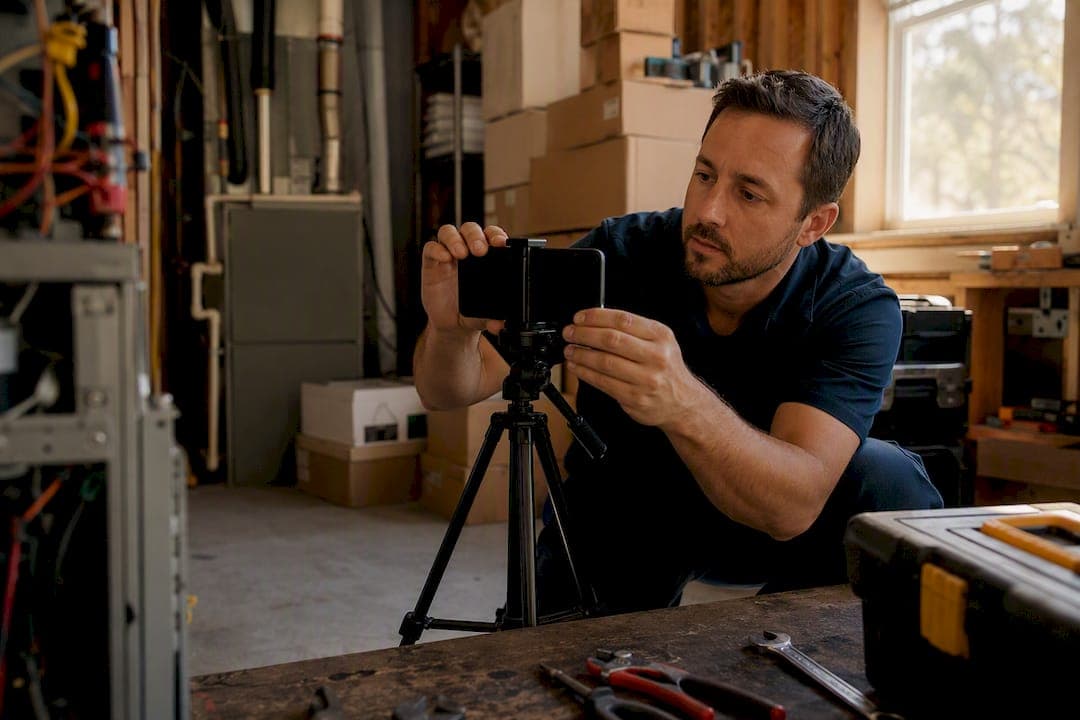
Make a 3 to 5 minute how-to video that answers your phone's most common question, and publish it before you touch anything fancier. This single format outperforms every other type at that length: how-to videos in the 3 to 5 minute range hold a 74% engagement rate versus a 43% average for other content of the same length. That gap is the whole argument for where to start.
Here's the two-step plan:
- Publish the full how-to video to YouTube, optimized around the exact question your dispatchers hear weekly ("why is my AC blowing warm air," "why does my furnace short cycle").
- Cut 1 to 3 short-form clips (30 to 60 seconds) from that same footage for TikTok and Instagram, each built around one moment worth stopping the scroll for.
Pro Tip: Film the how-to first, then edit the shorts from its raw footage. You get four assets from one afternoon of filming instead of shooting each piece separately.
Firms like Leapify Media build the pipeline that connects this kind of content to actual booked jobs rather than letting the views sit disconnected from revenue.
Key Takeaways
A 3 to 5 minute how-to video published to YouTube and repurposed into short clips builds trust and books more jobs than any other single HVAC content format.
| Point | Details |
|---|---|
| Start with one how-to | Film a 3 to 5 minute video answering your most common phone question before anything else. |
| Repurpose aggressively | Cut 1 to 3 short clips from the same footage for TikTok and Instagram discovery. |
| Track calls, not views | Use call tracking and UTMs to connect video directly to booked jobs, not vanity metrics. |
| Keep pricing honest | Naming even a starting price range on camera builds more trust than staying vague. |
| Wire video into a pipeline | Leapify Media connects video traffic to booking flows and AI-driven dispatch to turn attention into revenue. |
Table of Contents
- Which HVAC Brand Video Formats Actually Move the Needle?
- How Do You Write a Script That Turns Viewers Into Callers?
- What Gear and Shots Do You Actually Need?
- Where Should You Publish and How Do You Repurpose It?
- What Should You Actually Track After Publishing?
- What Legal and Compliance Rules Apply to HVAC Video Ads?
- Why Most HVAC Video Advice Misses the Point
- How Leapify Media Turns HVAC Video Attention Into Booked Jobs
- Frequently Asked Questions
- Sources
Which HVAC Brand Video Formats Actually Move the Needle?
Not every video earns its place in your production schedule. Three formats consistently do the work: how-to and educational videos, before-and-after job footage, and trust builders like technician introductions or pricing transparency clips. Each one serves a different point in the buyer journey.
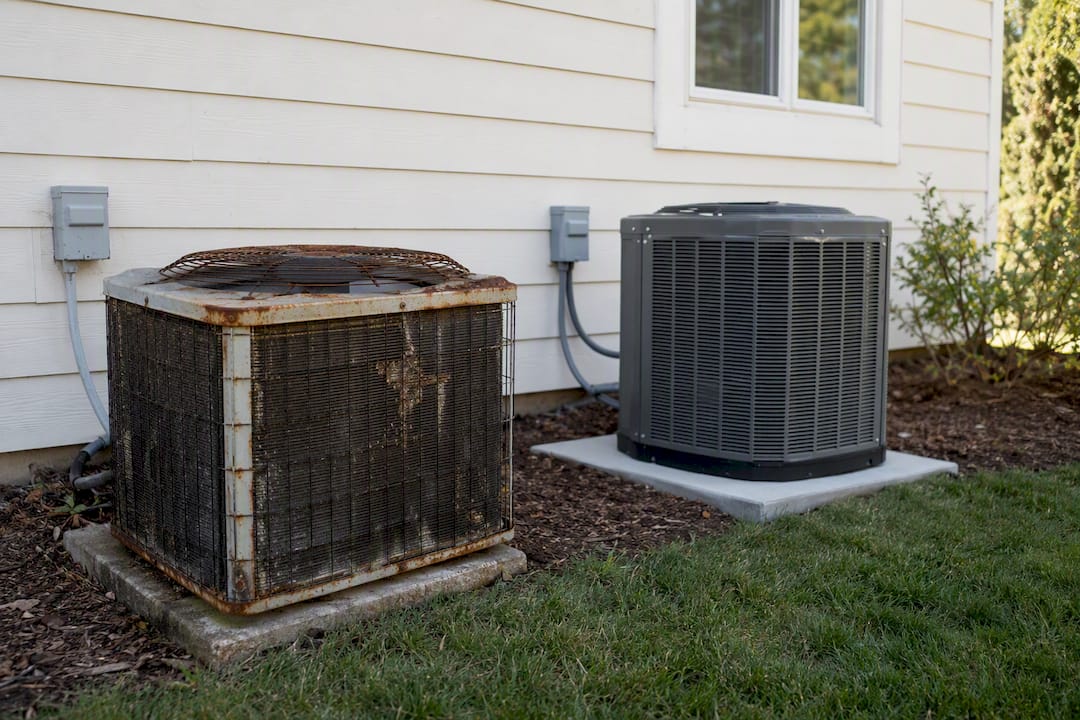
How-to videos catch homeowners already searching for an answer, and that's why they hit the 74% engagement mark Wistia measured. Before-and-after clips work differently. They don't answer a search query. They build proof, showing a rusted, failing unit next to the clean install that replaced it, which matters most for readers close to a purchase decision. Trust builders (a tech explaining how they diagnose a problem, a transparent walk-through of what a diagnostic visit costs) close the gap between "I found this contractor" and "I trust this contractor with my house."
Short-form clips deserve a place in the mix too. 21% of marketers now rank short-form video as the format delivering the highest ROI of anything they produce, which is a strong argument for treating your long-form how-to as raw material rather than a finished product.
A workable starting cadence looks like this:
- One 3 to 5 minute how-to video per week, built around a real question from your call logs.
- Two to three short clips per week, cut from that same how-to or from job-site footage.
- One trust-builder video per month, rotating between technician spotlights and pricing walk-throughs.
That mix covers search intent, discovery, and credibility without demanding a full production crew.
How Do You Write a Script That Turns Viewers Into Callers?
Short clips and long-form how-tos need different scripts, but both follow a structure you can reuse every time you film.
For a short clip (30 to 60 seconds), use a three-line frame:
- Open with the problem ("Your AC is running but the air isn't cold. Here's why.")
- Deliver the value in one clear, visual beat, showing the actual cause or fix.
- Close with a specific CTA ("Book a diagnostic this week for $89" beats "Call us today").
For the 3 to 5 minute how-to, build around this outline:
- Introduce the problem in the homeowner's own language.
- State the symptom clearly (what they're seeing or hearing).
- Walk through two or three quick checks anyone can do safely.
- Show the actual fix or diagnosis on camera.
- Explain when the problem is a DIY fix versus when it needs a technician.
- Mention pricing honestly. Even a range builds more trust than silence.
- Close with a direct call to action.
Pro Tip: Never end a video on "call us." End on a specific action tied to urgency or value: "Book your fall tune-up before the first cold snap" converts better than a generic invitation.
Pricing transparency deserves its own mention here. Homeowners distrust HVAC pricing more than almost any other home service category, so a video that names even a starting range for a diagnostic visit tends to earn more calls than one that stays vague.
What Gear and Shots Do You Actually Need?
You don't need a production budget to make video that books jobs. A smartphone from the last three years, a $30 to $50 clip-on lavalier mic, and a $25 tripod cover almost every setup you'll need on a job site.
Gear checklist:
- Smartphone (rear camera, shot horizontally for YouTube, vertically for shorts)
- External mic (built-in phone audio picks up compressor and fan noise badly)
- Small tripod or gimbal for steady shots
- Natural daylight or a $40 clip light for attic and crawlspace work
- A clean rag and a quick tidy-up of the work area before filming (cluttered background shots undercut the trust builder you're trying to create)
Shot list for a typical how-to:
- Wide establishing shot of the unit or problem area
- Close-up of the specific symptom (a frozen coil, a worn belt, a dirty filter)
- Technician talking directly to camera, explaining what's happening
- Hands-on shot of the fix or diagnostic step
- Final wide shot showing the resolved system
Editing checklist before you publish:
- Add burned-in captions (most viewers watch with sound off)
- Include timestamps in the YouTube description for videos over 2 minutes
- Write a specific title with the actual symptom or system type, not a vague label like "HVAC Tips"
- Design a thumbnail with a clear before/after or a visible tool or gauge, since generic talking-head thumbnails get skipped
Where Should You Publish and How Do You Repurpose It?
YouTube is where evergreen how-to content earns its keep. It's searchable years after you publish, and Elevarus notes it works best as demand generation rather than a last-click channel, meaning it should get credit for lifting branded search and calls, not just direct clicks. TikTok and Instagram Reels serve a different job: rapid discovery among people who weren't searching for you but stop scrolling because your clip is specific and visual.
The repurposing workflow is straightforward once you build the habit:
- Film one 3 to 5 minute how-to.
- Cut 2 to 3 short clips (30 to 60 seconds) from the strongest moments.
- Pull 1 to 2 six to eight second hooks for use as ad creative or Reels teasers.
- Generate matching thumbnails and captions for each cut.
Post the long-form video on a fixed weekly day. Stagger the short clips across the days after, so your channel never looks stale.
Pro Tip: Send every video description and every bio link to one dedicated landing page built to book jobs, not your homepage. A homepage forces the viewer to hunt for what to do next, and that friction kills conversions you already earned with the video.
What Should You Actually Track After Publishing?
View counts feel good and mean almost nothing. The KPIs that matter connect directly to revenue: verified inbound calls, booked jobs, and branded-search lift, meaning more people searching your business name after they've watched your content.
- Set up a dedicated call-tracking number for every video description and landing page link, so you know exactly which calls originated from video rather than guessing.
- Tag every link with a unique UTM parameter (per platform, per video) so you can trace a booked job back to the exact clip that drove it.
- Measure branded-search lift over a 60-day window after a video goes live, since search interest in your company name is one of the clearest signs a video built awareness rather than just attention.
- Compare cost per verified call against your paid channels. Industry benchmarks put non-branded HVAC Google Ads leads around $149 each, while a smartphone-produced video can generate organic calls at essentially zero incremental production cost once it's live.
Set expectations against real numbers, not hope. The 74% engagement rate on 3 to 5 minute how-tos and the 21% of marketers naming short-form as their top ROI format are useful benchmarks, but the number that actually matters to your business is verified calls converted into booked jobs.
What Legal and Compliance Rules Apply to HVAC Video Ads?
A few compliance points get overlooked until they cause a real problem. If a video features a customer's home, face, or voice, get written consent before publishing, even for a quick testimonial clip filmed on a job site. A verbal "sure, go ahead" from a homeowner isn't documentation if a dispute comes up later.
Pricing claims need the same care in a video as in print advertising. If you state a price or a range on camera, that claim needs to reflect what customers actually pay, since the Federal Trade Commission treats misleading pricing claims in video the same way it treats them in a print ad or flyer. Avoid vague phrases like "starting at" unless a meaningful share of jobs actually book at that number.
Manufacturer and brand names deserve caution too. If you show a specific brand of equipment on camera and imply an endorsement or certification you don't actually hold, that can create liability with the manufacturer, not just a regulatory issue. Stick to describing what you did and why, not implying a partnership that doesn't exist.
Finally, if your state or local licensing board requires a license number in advertising, that requirement extends to video descriptions and on-screen text, not just your website footer. Check your state contractor licensing rules before your first video goes live, since requirements vary significantly by state and by trade.
Why Most HVAC Video Advice Misses the Point
Most HVAC video marketing advice treats views and likes as the goal, and that's backward. A video that gets 50,000 views and zero booked jobs has failed, no matter how good the engagement graph looks. A video that gets 800 views and generates twelve verified calls has succeeded completely.
The conventional advice also overweights production value. Homeowners don't distrust a shaky, smartphone-shot video of a technician explaining a real problem. They distrust polish that feels like it's hiding something. The research backs this up: how-to content built around a genuine symptom outperforms slicker content by a wide margin, because it answers a question the viewer already has rather than trying to manufacture interest from nothing.
What should come first isn't a content calendar or a brand style guide. It's one well-made how-to video, published with a clear next step, and a system that actually tracks whether it turned into a booked job. Everything else, the shorts, the trust builders, the paid boosts, is amplification of something that already works. Build the pipeline before you build the volume.
How Leapify Media Turns HVAC Video Attention Into Booked Jobs
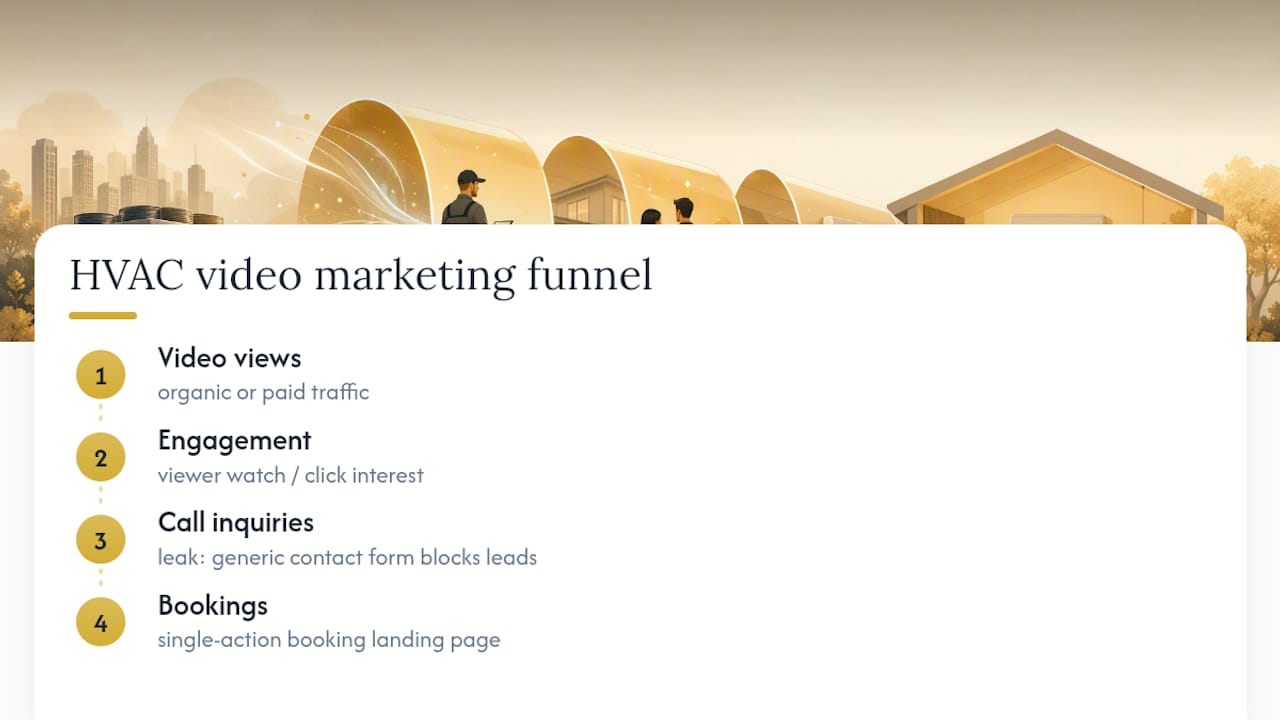
A great how-to video that dead-ends on a generic contact form wastes most of its value. Leapify Media exists to close that gap. The company builds the infrastructure between the click and the booked job: on-premise AI lead dispatch and intent scoring that flags a hot inbound call the moment it comes in, landing pages engineered around a single booking action, and Google Ads and Meta Ads management that feeds paid traffic into the same system your organic video already built.
Clients working with Leapify Media have reported returns as high as 20x on ad spend, driven by that same principle: media spend and content only pay off when the pipeline behind them actually converts attention into scheduled work. That applies just as much to a video that took an afternoon to film as it does to a paid campaign.
If your team already has video in the works, or is about to start, the fastest next step is a look at your current funnel and booking flow to see where the leak is before you scale content production. Get started with a review of your setup at Leapify Media.
Frequently Asked Questions
What length should an HVAC brand video be? Aim for 3 to 5 minutes for how-to content, since that length holds a 74% engagement rate compared with 43% for other formats. Keep discovery clips for TikTok and Instagram under 60 seconds.
Do I need professional equipment to start? No. A recent smartphone, a clip-on mic, and a small tripod cover almost every shot an HVAC how-to or job-site video needs. Production value matters less than answering a real question clearly.
Which platform should get my HVAC videos first? Publish the full how-to to YouTube first, since it's searchable long after posting and builds branded search over time. Then cut short clips for TikTok and Instagram to catch viewers who weren't already searching.
How do I know if a video is actually generating business? Track verified inbound calls with a dedicated tracking number, tag every link with a unique UTM, and watch for branded-search lift over a 60-day window after publishing, rather than judging success by views or likes alone.